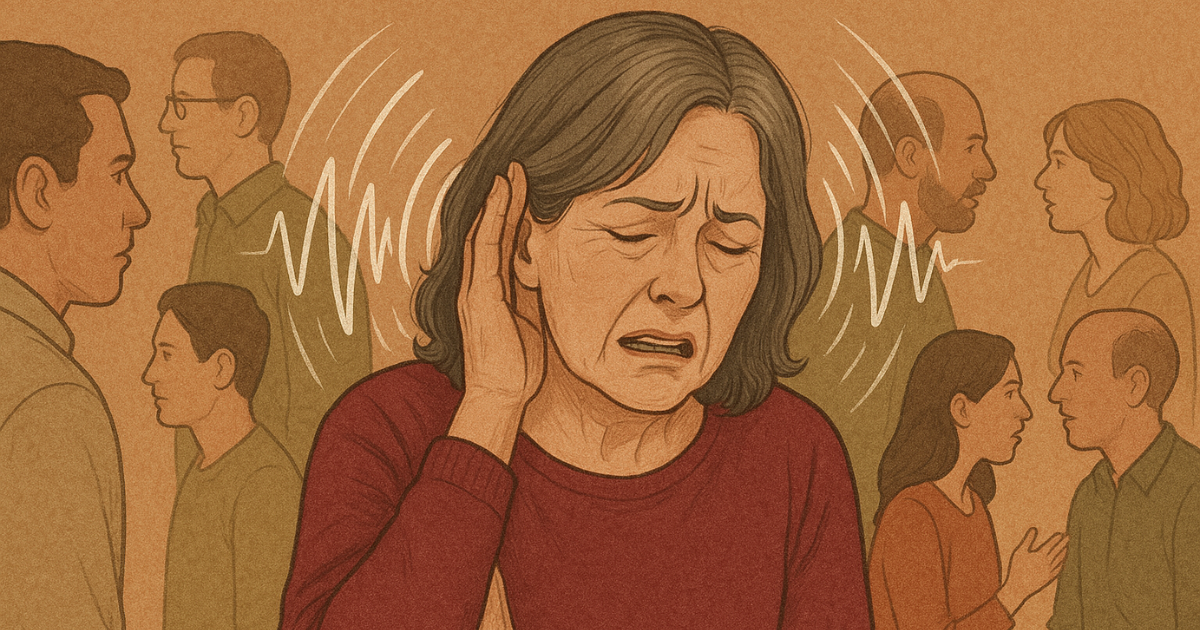
In recent years, we’ve seen mental health move from being whispered about to being openly discussed. Terms like anxiety, stress, and emotional well-being are less stigmatized and people are more willing to talk about how their mind affects their body. That shift is especially important when we look at hearing health.
For many, hearing loss or persistent ringing (tinnitus) isn’t just an ear problem: it touches emotions, social life, sleep, and stress. At the crossroads of hearing and mental health lies a crucial connection: when hearing is challenged, anxiety often creeps in — and when anxiety is present, hearing issues may feel even more overwhelming. Understanding that link can help people feel less alone and begin to take meaningful steps toward relief.
How Do People Experience Anxiety?
There is no one size fits all for anxiety, and it is more than just the feeling of being nervous before a big meeting. Clinically, it involves persistent worry, tension, physical symptoms (like increased heart rate, shortness of breath, nausea), and a heightened “on edge” state of being. Many people know what it feels like: the heart pounds, thoughts race, you anticipate “what ifs”. Yet, despite how common anxiety is, a stigma remains. Some may deny their feelings, saying “I’m just stressed,” or “It’s nothing” because admitting anxiety can feel weak or shameful.
In the context of hearing problems, this can be even more acute: someone might be trying to “tough it out”, ignoring the stress they feel when they struggle to hear or are constantly irritated by a ringing sound. Recognizing anxiety for what it is — a valid, treatable response in the body — is an important first step.
Is there a Connection Between Hearing Health and Anxiety?
The research increasingly supports a strong link between hearing issues (especially tinnitus) and anxiety. For example:
In a large population-based study of middle-aged and older adults, those whose tinnitus interfered with daily life were more likely to report anxiety symptoms than those without tinnitus or non-bothersome tinnitus.
One review showed that among adult tinnitus sufferers, 26.1 % reported anxiety in the past 12 months versus only 9.2 % of those without tinnitus.
Another study noted that moderate or severe anxiety was experienced by about 24 % of tinnitus patients, and when tinnitus was perceived as more severe, anxiety rose to 40.4 % in one sample.
These data don’t mean hearing loss or tinnitus automatically cause anxiety, but they tell us that when hearing problems are present, anxiety is much more likely. And when anxiety is present, the hearing issues often feel worse.
There’s also Social Anxiety
When you struggle to hear, especially in noisy settings, you might start avoiding social gatherings or withdraw from conversation because it’s simply exhausting. That avoidance can lead to social anxiety: worrying about misunderstandings, feeling “out of the loop”, or being embarrassed for asking people to repeat themselves. For someone with tinnitus, the constant awareness of the ringing can make social settings feel chaotic, noisy, or unsafe. This means hearing issues and communication difficulty feed into emotional distress, and that distress can intensify anxiety around social interactions.
“Fight or Flight” can Increase Sound Sensitivity and Exacerbate Tinnitus
When anxiety kicks in, our nervous system shifts into a heightened state: the “fight or flight” response. Heart rate goes up, senses become sharper, and the brain is alert for “threats”. That hyper-alert state can affect how we process sound. For someone with hearing loss or tinnitus, this might mean:
Sounds feel louder or more intrusive.
Tinnitus becomes more noticeable or intense, as activation of the autonomic nervous system heightens awareness of internal sounds and makes the ringing feel louder.
Even mild hearing difficulties feel more noticeable because your system is primed to “listen harder.”
In essence, anxiety can amplify sound sensitivity — making hearing problems more difficult to ignore and thereby reinforcing the stress. The result: a feedback loop where hearing issues increase anxiety, and anxiety increases hearing sensitivity.
Addressing Your Hearing & Your Peace of Mind
If you’re navigating hearing loss or tinnitus and noticing that it’s affecting more than just your ears, perhaps you’re feeling anxious, withdrawing socially, or finding your symptoms intensify during stress, you’re not imagining it, and you’re not alone. At Hope Hearing & Tinnitus Center, we understand how closely hearing health and emotional well-being are connected. Our team is here to provide support, answer your questions, and guide you toward solutions that are safe, evidence based, and tailored to you.
Tinnitus may not have a one size fits all cure, but with the right professional guidance and care, tinnitus is treatable. And it can become far more manageable, helping you regain balance, comfort, and confidence in your daily life.